

Golden eras are often only truly appreciated in retrospect – unless of course it is the 2006-10 England’s men’s football team. But in the case of the World Endurance Championship (WEC), it’s impossible to ignore the distinct current golden haze hovering over the series.
Last season saw multiple manufacturers sharing wins across the world. Unpredictability from round-to-round, and an intensely competitive playing field are all the factors often held up as the Holy Grail of success for a motorsport series. The eight-stop 2025 WEC Hypercar championship delivered five different manufacturer winners, featuring seven different cars. LMGT3 went further still and delivered a clean sweep of 8/8 different winning cars.
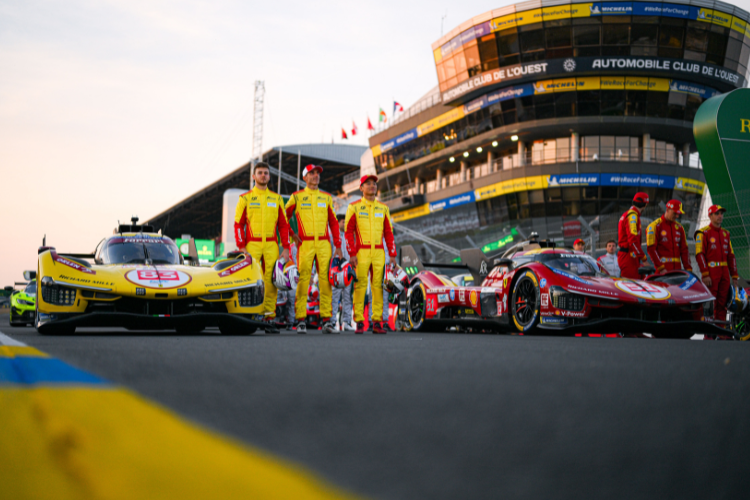
Add to that a shock victory for the yellow #83 Ferrari of Robert Kubica, Phil Hanson and Yifei Ye beating the red factory Ferraris to the Le Mans race win, and it was truly a WEC season to remember.
Papaya rules and a Ford focus
For Hypercar, its current strength is perhaps best illustrated by how it has rolled with the heavy blows of Porsche’s (19-time Le Mans 24h winners) and to a lesser extent Alpine’s departure in 2026. These developments have been almost entirely eclipsed by the arrivals and returns of motorsport royalty manufacturers.
Confirmed in early 2025, current dual Formula 1 champions, McLaren Racing, will make their eagerly anticipated debut in 2027. After two successful seasons competing in LMGT3, including a race win last year, this involvement signals their first full Hypercar programme since the late 1990s.
After their recent Formula 1 resurgence, it is certain that the new-to-WEC fans will be watching this debut with interest. But how will McLaren perform competing on both fronts? CEO Zak Brown has previously confirmed that both of his F1 drivers have expressed an interest in one day competing at Le Mans. And they are not alone on the current Formula 1 grid, as Max Verstappen has more than once confirmed that his intention one day is to race at the Circuit de la Sarthe. It raises the tantalising – albeit rather hopeful– possibility of one day seeing a full-time F1 driver competing at the race for the first time since Fernando Alonso in 2018.
2027 will also welcome one of the world’s biggest automotive manufacturers to the Hypercar fold. Ford’s return to the sport will see it compete once more at a race where it claimed four consecutive overall triumphs with the iconic GT40 from1966-69.
The return will see the immediate reignition of its rivalry with both fellow American marque General Motors, in the form of its Cadillac brand, and its old Italian adversary, Ferrari.
The Prancing Horse formed the other half of one of Le Mans greatest ever rivalries. After six straight years of Ferrari dominance in Le Mans, Ford finally beat the Maranello outfit at the third attempt in 1966, leading home a Ford 1-2-3 to form one of Le Mans most iconic photos and start the four-year Ford winning streak. The battle was depicted in 2019’s Ford vs Ferrari film, featuring Matt Damon and Christian Bale.
And at time of writing, Honda is heavily rumoured to be poised to return in 2027, which will mark the Japanese marque’s first involvement in WEC’s top category since 2013. Already boasting a Hypercar-ready machine under the current regulations, should it happen, the Acura ARX-06 would arrive with an excellent recent pedigree after its wins in the 2023 Daytona 24h, the 2023 Petit Le Mans and the 2024 Sebring 12h.
These confirmed and rumoured new arrivals will be met on the grid by Genesis Racing (Hyundai), who launch their WEC adventure in 2026, and in doing so, will become the first Korean outfit to compete in the series.
All this will mean that at least ten different automotive brands will make up a mouthwatering 2027 Hypercar category.
In LMGT3, despite losing McLaren to Hypercar after 2026, the category still boasts a stacked line up of manufacturers including Aston Martin, BMW, Corvette, Ferrari, Ford, Lexus, Mercedes and Porsche who are widely expected to continue to develop their commitments to 2027.
A Welcome Current Era of Regulations
Another factor that is drawing in motorsport’s most illustrious brands that shouldn’t be underestimated is the current rules set – or more pertinently, its stability. The fear of regulation change is a nightmare for manufacturers hoping to build a new car and mount a campaign in a new series.
But the current rules and regulations that govern the Hypercar category have been extended through to at least 2032. This long-term stability for the teams has provided the sort of financial and competitive assurances they rely on to commit to the vast resources required for success.
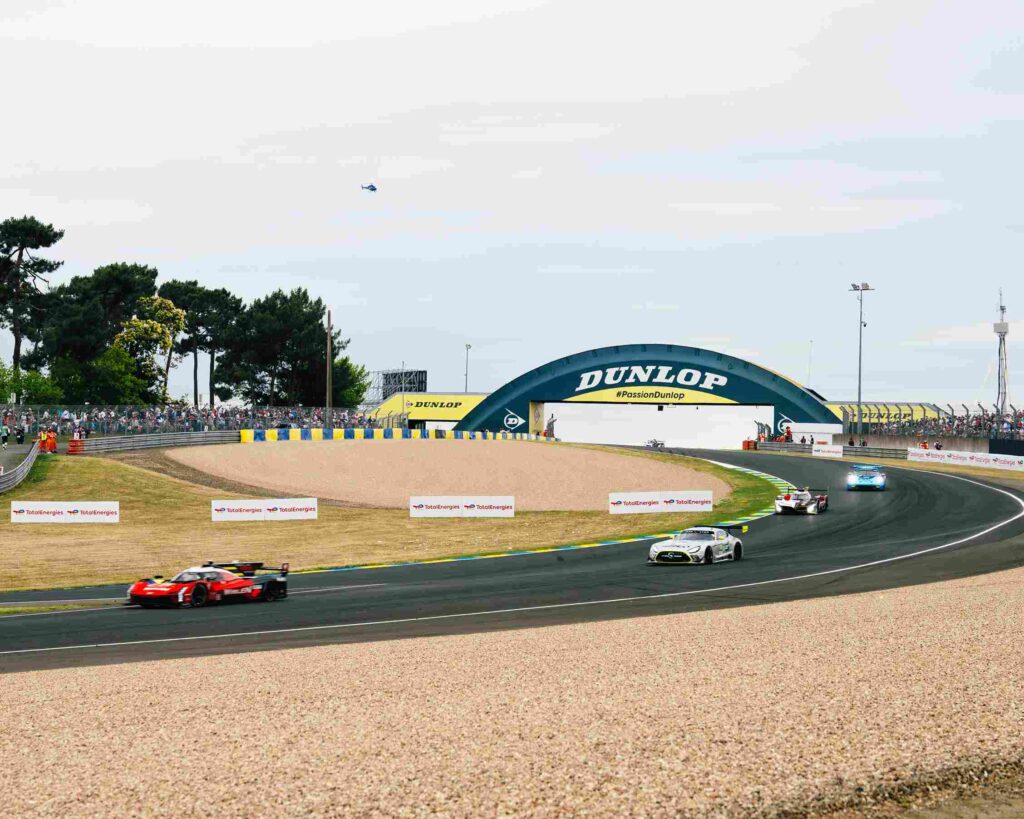
In LMP2 the current regulations have been extended to include 2027, which will mark the 10th season of the current formula. New regulations in 2028 will bring modernised and simplified cars – the Le Mans 24h will remain the only round the cars feature on the WEC calendar.
Since the LMGT3 class replaced the old GTE category in 2024, it has grown into its role as the established GT series, and its rules are to remain unchanged to encourage continued growth among privateer and factory-supported teams.
A Le Mans blockbuster 2027 awaits
We are in for an incredible race in 2026 – and there’s not long to wait! But, as so many constructors seem to have done, we are already looking ahead to 2027 with huge anticipation.
Perhaps the truest reflection of the series growth and success in recent years are the ever-reliable bums-on-seats metrics. Not only do the organisers report record attendance year after year, but 2026 has seen Motorsport Travel Destinations sell out of all nine accommodation types across all three of private sites in record time. This means we will host a record number of guests this June – and we can’t wait!
We hope you enjoy the 103rd year of the world’s most epic race this summer, and that you’ll join us in 2027 for what promises to be an unmissable blockbuster edition.