
Article by Alex Brundle – Images courtesy of Ferrari
When Motorsport Travel Destinations asked me to interview Phil in the build-up to the 24 Hours of Le Mans, I was naturally up for a chat with my old stablemate.
As I thought about what questions I could ask Phil that readers would want answered, I immediately thought back to the youngster coming into the same LMP2 team in 2019, he was the new kid, me? A seasoned pro deeply entrenched in my own racing exploits.
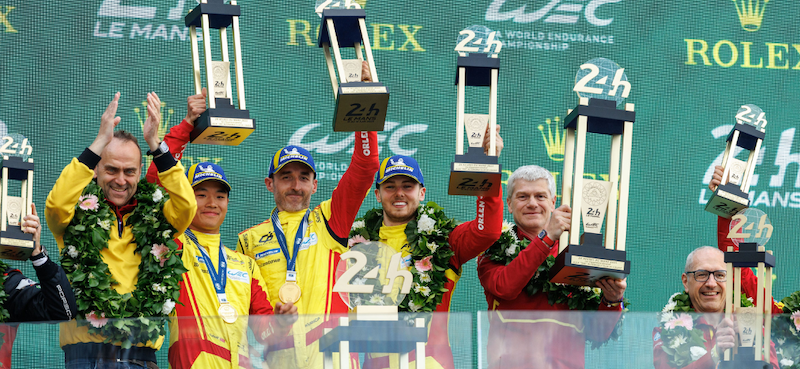
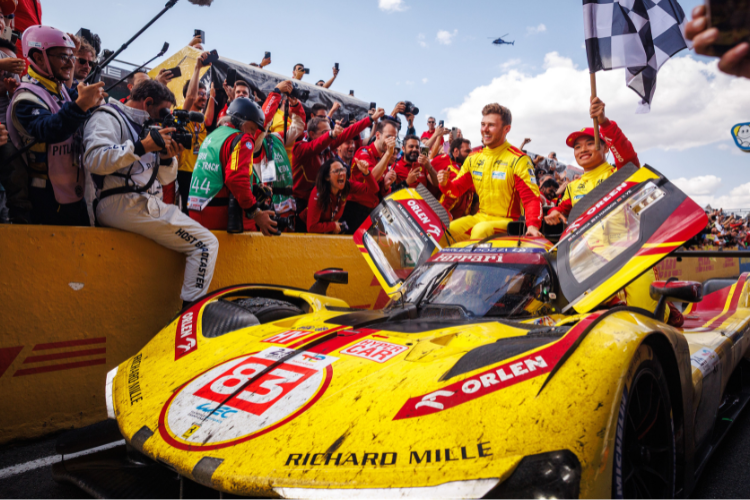
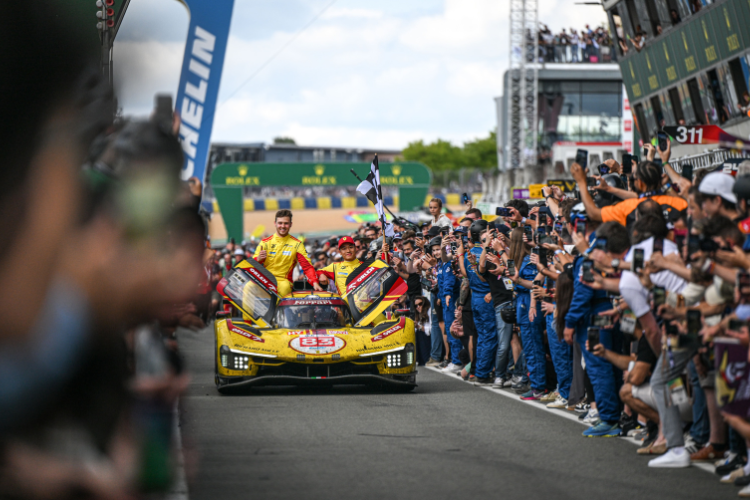
He was only 19 or so at the time, and after several years sharing a garage, remembering him engaging race by race in understanding the intricacies of sportscar racing from a standing start, it was truly remarkable to see him win the 24 Hours of Le Mans in the #83 privateer Ferrari in 2025. A reminder of the relentless upward mobility that motorsport affords is part of the reason that we love it.
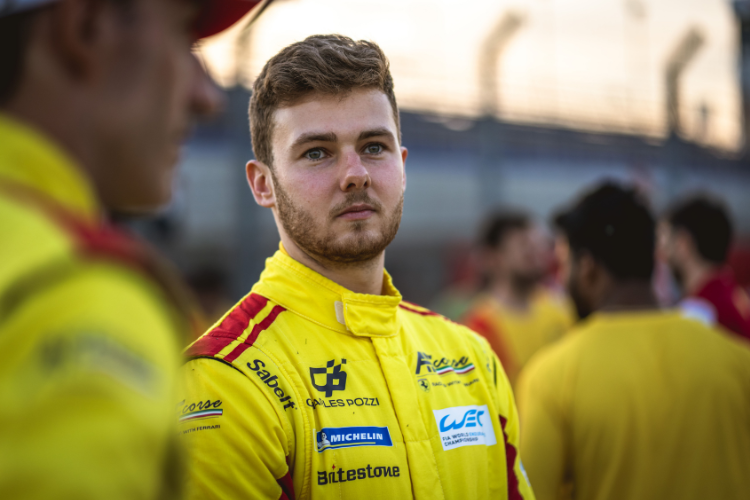
This would be Phil’s first interview as a Ferrari factory driver, a bit of an honour for me from a friend, as he’s recently been rewarded for his effort with a multi-year deal as a Ferrari factory driver. The Prancing Horse clearly recognises his talent. Despite years of hard work to reach the goal, Phil is still only 26 years old!
I now attend Le Mans as a member of the media, a stop on my march around the world following F1 and sports cars. In commentary and presentation for Eurosport and TNT, our paths have diverged plenty in recent years. However, I remain immensely impressed by his achievements – not at all envious! (he lied) – We had a great time chatting about the Endurance season ahead.
I hope you enjoy it too…
Alex Brundle:
Hiya mate – congratulations, firstly. You’ve had a Christmas to think about it. How does it feel now coming into another World Endurance Championship season as a Le Mans winner?
Phil Hanson:
Yeah, really exciting. I’ve reflected a lot on what it means to win and how it changes your mentality heading back. It reminds me a bit of LMP2. Once I’d won Le Mans there, I didn’t really want anything to do with the race unless it was to win again.
It’s the same now overall. I don’t have much interest in finishing second like I might have before. Once you’ve won Le Mans, anything else feels a little bit like a disappointment. The goal shifts. Before, a podium at Le Mans was a huge achievement in itself. Now, the target is just to win.
That said, it’s not getting any easier. There are more manufacturers than ever, more coming in the next few years, and the competition is intense. Last year was one of the closest finishes ever – what was it? 14 seconds to the Porsche? I honestly think it was one of the toughest Le Mans races to win, and it’s only going to get harder. My expectations have gone up -but so has the level of competition.
You talk about how difficult Le Mans is now – more manufacturers, more depth. Everyone knows you’ve got to be quick and consistent. But what’s the most underrated skill in the current era?
Reliability – or rather, the lack of attrition – has changed everything.
In the past, if you looked after the car and stayed consistent, you’d naturally move forward as others hit mechanical problems. That’s far less the case now. The cars are so strong that most retirements come from driving mistakes, not failures.
So Le Mans has basically become a 24-hour sprint race. You push flat-out the entire time because you know the car can take it. The flip side is there’s zero margin for error. You can’t cruise at night or back off in the early hours like drivers once did. Every lap matters, and mistakes, penalties, track limits, small errors cost massively.
With that many cars still in contention, you’re always under pressure. Is it different jumping into a car that can win overall versus one that can win class?
Honestly, for me the pressure felt similar – just at different points in my career.
When I was in LMP2, that was my world. Winning that class was the peak of what I felt I could achieve at the time, so the pressure felt just as big. I wasn’t even thinking about Hypercar back then – I was focused on mastering LMP2.
Now I’ve grown into hypercar and overall contention. My expectations of myself have risen with that progression, so the pressure feels natural rather than overwhelming. It’s less about class versus overall – more about where you are in your career and what you expect from yourself.
You’ve raced with great teams, but stepping into a Ferrari hypercar is another level. Does becoming a works driver change the experience?
Yeah, but the biggest steps all happened within hypercar itself. First, just being a driver in the top class was a jump. Then moving into Ferrari was another – the fanbase alone is incredible. You feel the support everywhere, especially at Le Mans. People cheer for Ferrari regardless of who’s driving.
Then becoming a factory driver adds another layer. You’re more embedded in the brand, closer to the “family.” I haven’t fully experienced that trackside yet since the announcement only came recently, but I expect you’ll feel it most at European races -Imola especially.
From the outside it looks like the same seat, same car – just with a works title. What actually changes day-to-day?
There are real differences, mostly away from the track.
There’s more responsibility – time in Maranello, simulator work, development programmes, GT testing, Evo kit running. More media, more manufacturer commitments. Ferrari is huge, so there’s a lot commercially and technically around the racing.
But once you’re at the track, the job’s the same – perform, win, deliver results. That doesn’t change. Sometimes you’re racing the other Ferraris, sometimes playing the team game. It’s competitive but very sporting across the cars, which I like.
Let’s talk about the race itself. Fans see you flash through the Porsche Curves every few minutes – but what’s the hardest part of driving this hypercar era at Le Mans?
The intensity. These aren’t the fastest Le Mans cars ever, but the technology and reliability mean everyone can push constantly. And with 20-plus hypercars now, you’re never getting a break.
In the past, you might build a one-minute lead and manage it. Now you’re lucky to have 20 seconds. The pressure never drops. It’s like any WEC race, just stretched over 24 hours with far higher stakes.
The focus required is relentless. Drivers describe it as entering a mental “zone” where your mind almost blanks. But funny things still creep in.
You’ll be flat-out at night and suddenly think, what’s that smell? Barbecue. Because the fans are back for race week. Or you see flashes at Arnage – photographers on the bank that weren’t there in testing. Even the extra light from campsites changes visibility. Little sensory details cut through even when you’re fully locked in.
I used to get that out-of-body moment, realising the race you’d built your life around was actually happening.
Exactly. You look forward to it for months, then halfway through think: This is it. It’s happening right now.
And the week builds so slowly -then suddenly it’s race day and you feel underprepared, even though you’ve been there all week waiting.
Is that the biggest misconception, just how much focus it takes?
That, and the preparation. People think preparation is the season leading in, then the race itself. They forget the month before Le Mans. The car prep, the microscopic checks, the fitness work, the logistics.
Teams arrive earlier every year. Garages, trucks, infrastructure – it’s weeks of work. The 24 hours is just the visible part. For crews doing 30-plus pit stops, it’s relentless.
You’ve always taken fitness seriously. How physical are these cars now?
In pure forces, LMP2 in its peak was probably tougher. But the race intensity is higher now, which brings a different fatigue – more mental load, more sustained focus.
Experience helps. After nine Le Mans starts, you know what to expect physically. Confidence reduces the strain.
I was actually surprised how intense Ferrari’s drivers are about fitness – cycling especially. Living in Monaco and Italy helps! But it shows how seriously everyone takes the physical side.
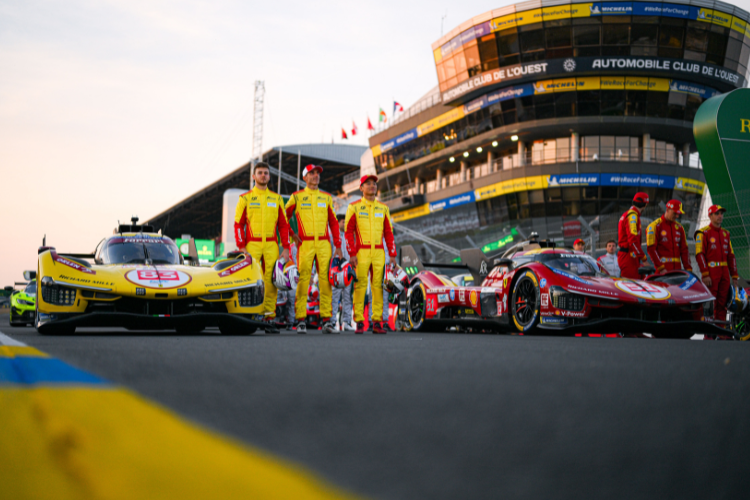
Ferrari hypercar looks like a fairytale from the outside – success straight away. Inside the garage, is it as impressive as it seems?
The biggest difference isn’t what you see at the track – it’s the culture behind the scenes.
There’s relentless pressure internally to find performance, even with tightly controlled regulations. Development is limited, so gains come from data, setup work, constant re-evaluation.
The three-car data pool helps massively. But it’s also Ferrari’s heritage – the expectation is to win, not participate. That mindset runs through everyone, from engineers to media staff.
Ferrari is built on motorsport success in a way few manufacturers are. You feel that shared ambition everywhere -and it drives performance higher every year.
Final one -what’s top of your debrief sheet heading into 2026?
Continuity and knowledge.
For the first time we’ve got driver consistency in the #83 crew. I’ve got a full season of experience with the car, so everything becomes second nature – switches, systems, behaviours.
We now have data from every circuit, including ones you can’t test at like Fuji or São Paulo. Understanding tyre degradation, race evolution, wet performance, all of that builds confidence.
Setups evolved a lot from ’24 to ’25, and there’s still performance to unlock. Personally, I can now give clearer feedback and direction, which is crucial when you might only get 30–40 minutes of practice in a race weekend.
Every lap counts. But now it’s laps on top of a full year of knowledge – and that makes a huge difference.